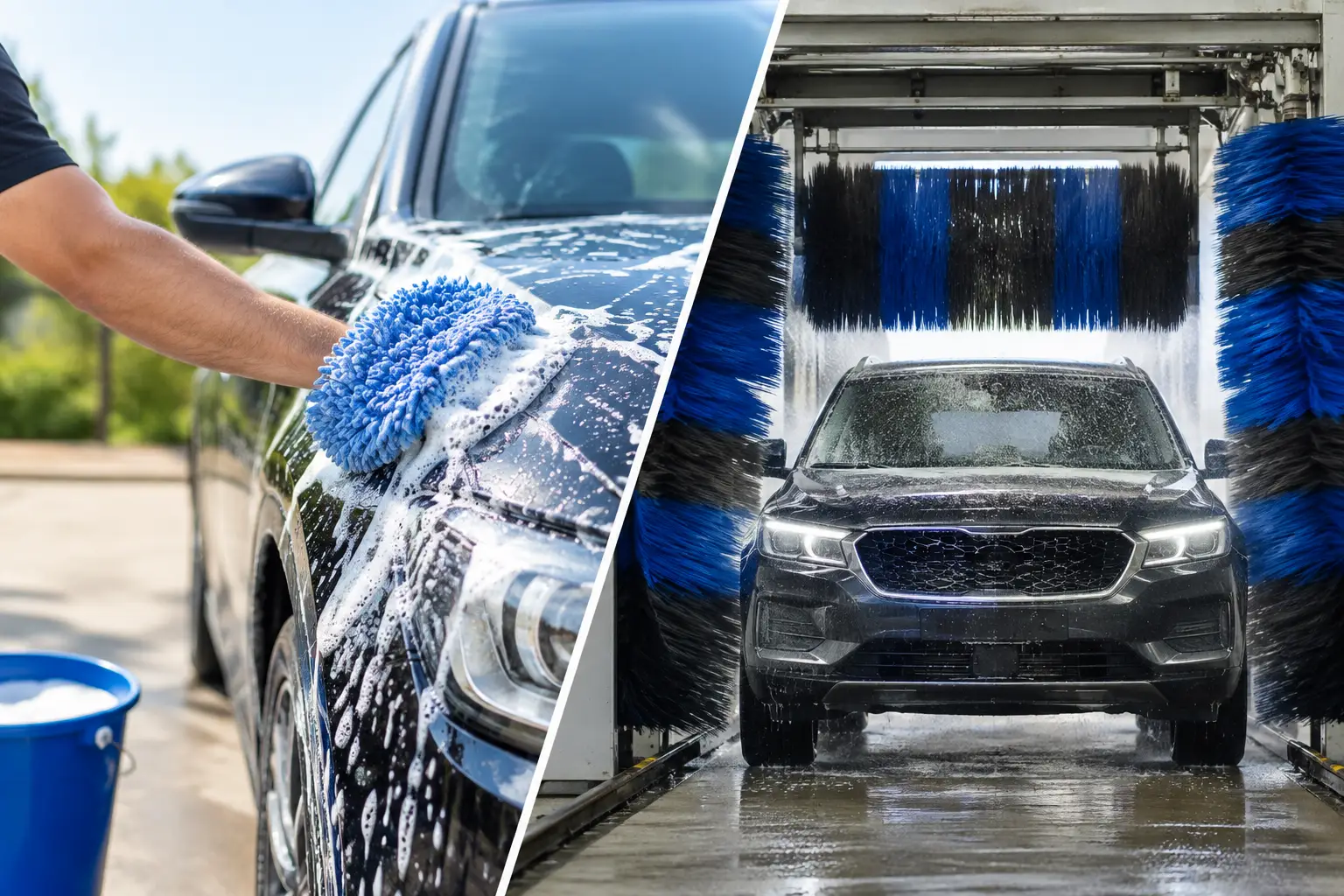
A black SUV can look clean after almost any wash. Under Austin sunlight, though, the difference becomes obvious: hazy paint, faint swirls around the door handles, water trapped behind mirrors, and tires dressed unevenly. The hand wash vs automatic wash decision is not only about convenience. It affects how your vehicle presents, how its exterior ages, and whether each cleaning supports the premium condition you expect.
For a daily driver that needs a quick refresh, an automatic wash may have a place. For luxury vehicles, newer paint, darker colors, specialty finishes, and owners who care about preserving a polished appearance, a professional hand wash usually offers a higher standard of care. The right choice depends on the wash method, the vehicle’s condition, and what you want from the appointment.
Hand Wash vs Automatic Wash: The Core Difference
An automatic wash is designed for volume and speed. You drive in, follow the track, and leave with a cleaner vehicle in minutes. Depending on the facility, machines may use spinning brushes, cloth strips, high-pressure water, chemicals, air dryers, and basic protectants. That consistency can be useful when time is tight, but the process is built to treat a wide range of vehicles in the same way.
A hand wash is more deliberate. A detailer can evaluate the paint before beginning, choose appropriate products, focus on high-contact areas, and adjust the process for your vehicle. The goal is not simply to remove visible dirt. It is to clean the exterior while limiting unnecessary friction and addressing the details automated equipment often misses.
That distinction matters because dirt is abrasive. When grit is dragged across paint by a contaminated brush, mitt, or towel, it can leave fine scratches known as swirl marks. A hand wash is not automatically safe just because it is done by hand. Quality depends on clean tools, proper lubrication, careful technique, and a detailer who does not rush the process. Still, hand washing allows for control that most conveyor-style washes cannot provide.
Paint Safety Depends on the Type of Automatic Wash
Not every automatic wash carries the same level of risk. The most significant difference is between friction-based tunnel washes and touchless washes.
Brush and cloth tunnel washes
Traditional tunnel washes use brushes or cloth materials that make contact with the vehicle. These systems can remove surface grime efficiently, but they also reuse materials across many vehicles throughout the day. Even with regular maintenance, embedded debris and worn components can increase the chance of light marring, swirls, or fine scratches.
The concern is greater for black, deep blue, dark gray, and other darker finishes because imperfections show more clearly in direct light. Soft modern clear coats can also reveal wash-related marks sooner than owners expect. One visit may not transform the paint, but repeated friction over months or years can reduce clarity and gloss.
For a work truck coated in road dust or a vehicle headed to a quick errand, that trade-off may be acceptable. For a recently purchased luxury sedan, a performance vehicle, or a carefully maintained SUV, it is worth considering whether the convenience justifies the cumulative wear.
Touchless automatic washes
Touchless washes avoid physical brushes and cloth strips. They rely on water pressure and stronger cleaning chemicals, which reduces direct-contact scratching. For a lightly dusty vehicle, this can be a reasonable lower-risk option when a full hand wash is not practical.
The trade-off is cleaning precision. Without controlled contact, touchless systems often struggle with road film, brake dust, bug residue, lower panels, wheel barrels, and the buildup around badges and trim. Stronger chemicals may help compensate, but frequent exposure can be less desirable for delicate finishes, existing waxes, and some protective coatings. Drying can also be incomplete, leaving mineral-heavy water to spot on paint and glass.
Touchless does not mean flawless. It simply changes the balance between friction risk and cleaning performance.
Why a Premium Hand Wash Delivers a Better Finish
A professional hand wash begins with observation. The detailer can identify baked-on contaminants, sensitive trim, matte or satin surfaces, wheels with heavy brake dust, and areas where water tends to collect. That attention is especially valuable for vehicles with ceramic coatings, paint protection film, vinyl wraps, aftermarket wheels, or premium interiors that deserve more than a standard wash cycle.
A careful process generally uses a pre-rinse to remove loose debris before any contact wash begins. This is followed by appropriate shampoo, clean wash media, and measured technique rather than aggressive scrubbing. Wheels and lower body panels require separate attention because they collect the heaviest contamination. Drying matters just as much. High-quality microfiber towels, controlled air, and careful work around emblems, mirrors, and door jambs help prevent spots and streaks.
The visible result is usually more complete: cleaner wheels, clearer glass, more consistent tire appearance, and paint that looks sharper rather than merely wet. Just as important, a detailer can spot concerns that an automatic wash cannot address, such as sap, bird droppings, interior spills, fading trim, or early signs that the paint needs protection.
Convenience Is Not Exclusive to Automatic Washes
The strongest argument for an automatic wash is understandable: it is fast. Yet driving to the location, waiting in line, selecting a package, and finishing the trip can take more time than the wash itself. For busy professionals and households, that small task has a habit of moving to the bottom of the weekend list.
Mobile luxury detailing changes the equation. A scheduled hand wash or full-service detail comes to your home, office, or another approved location, allowing the vehicle to be cared for while you keep your day moving. Instead of fitting your calendar around a wash tunnel, you choose the appointment that fits your schedule.
That is where premium service becomes practical rather than indulgent. The value is not only in a cleaner vehicle. It is in avoiding the inconvenience of a drive-through facility while receiving individualized attention that is difficult to replicate at scale.
When an Automatic Wash Makes Sense
There is no need to treat every automatic wash as a mistake. A touchless wash can be useful after a dusty road trip, during pollen season, or when you need to remove fresh surface dirt before it settles. It may also be a sensible option for an older vehicle where perfect paint correction is not a priority.
The key is to set realistic expectations. An automatic wash is a maintenance shortcut, not a substitute for professional detailing. If you use one regularly, touchless is generally the more cautious choice for the paint. Avoid selecting aggressive brush options when possible, and do not assume the applied “protectant” replaces proper waxing, sealant, or coating maintenance.
A prompt rinse is also better than letting bird droppings, insect residue, or tree sap remain on the finish for days. Those contaminants can etch or stain paint, particularly under Texas heat. When immediate removal is necessary, a quick wash may be preferable to waiting for a perfect appointment.
Choose Care Based on Your Vehicle and Standards
If your vehicle is leased, recently purchased, coated, wrapped, dark-colored, or central to your professional image, hand washing is usually the more considered investment. It supports a cleaner finish with less uncontrolled contact and creates an opportunity for tailored exterior and interior care.
If your priority is basic speed and the vehicle has light contamination, an occasional touchless automatic wash can serve a practical purpose. The more you value paint clarity, wheel condition, detailed drying, and long-term presentation, the more compelling a professional hand wash becomes.
Aurelian Automotive provides appointment-based luxury detailing for owners who want that level of care without losing time to a fixed-location wash. A premium first detail is also an opportunity to establish the vehicle’s baseline condition before choosing a recurring maintenance schedule.
Your vehicle does not need a full detail every week. It does deserve a wash method that reflects how you use it, where you park it, and how you want it to look when you arrive. Choose the quick option when it truly serves the moment, and choose careful hands when the condition of the finish matters.