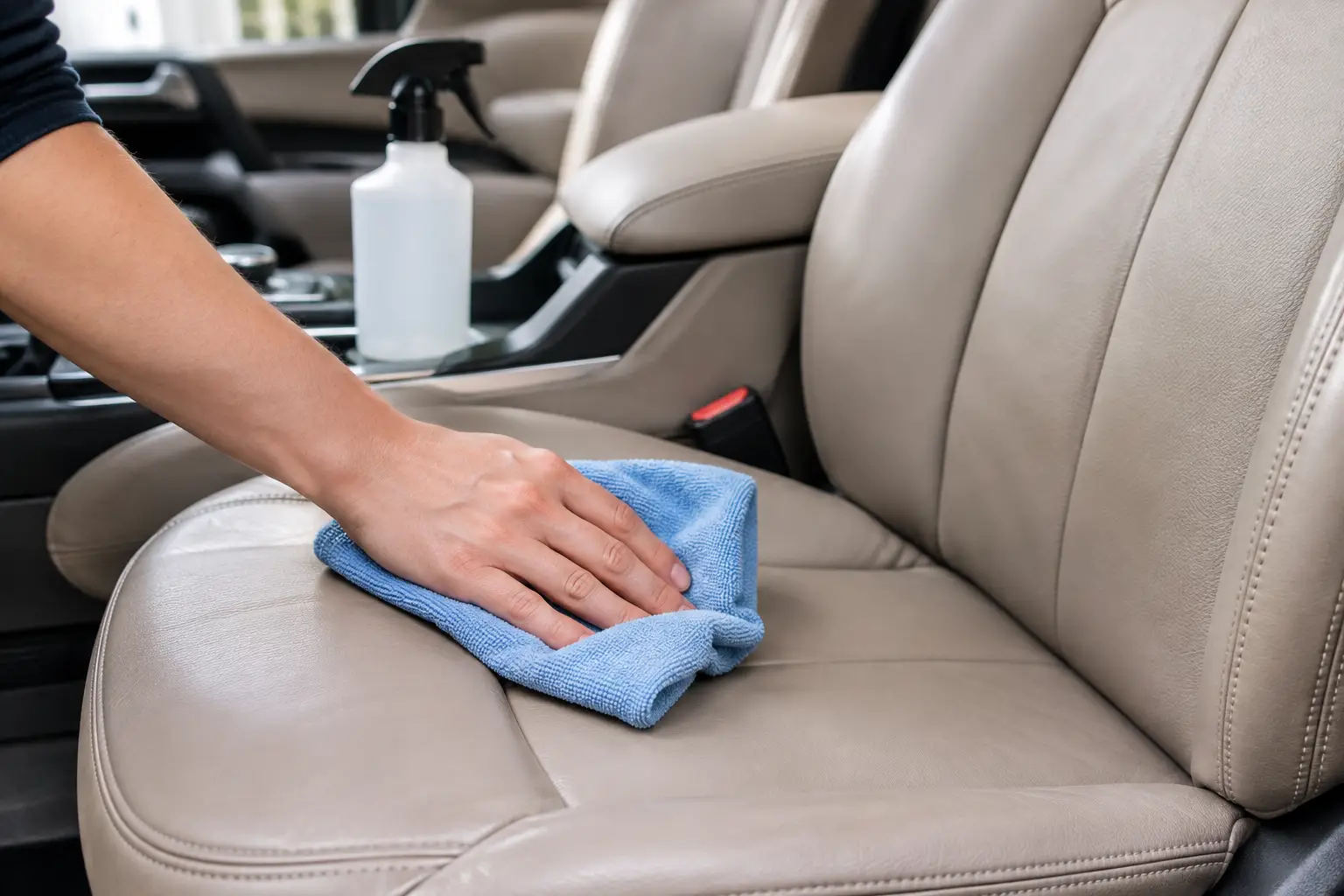
Leather seats rarely look dirty all at once. The change is gradual: a slightly dull driver’s bolster, darkened stitching, a shine on the armrest, or a texture that no longer feels as supple as it did when the vehicle was new. Knowing how to clean leather seats correctly protects the materials you see and touch every day without trading a quick clean for premature wear.
For a premium interior, the goal is not to make leather look glossy. It is to remove body oils, dust, sunscreen, spills, and everyday residue while preserving the natural, low-sheen finish that quality automotive leather is designed to have.
Start by Identifying What You’re Cleaning
Most modern vehicles use coated automotive leather. It has a protective finish over the hide, which makes routine cleaning more forgiving than uncoated leather furniture or specialty upholstery. Even so, that finish can be damaged by harsh chemicals, aggressive brushes, and excess moisture.
Some vehicles use semi-aniline or more delicate leather in seating surfaces, while others combine leather with vinyl, synthetic leather, perforated panels, suede-like inserts, or contrast stitching. The safest approach is to consult the owner’s manual when the material is uncertain, especially in a luxury or performance vehicle. What works well on durable coated leather may not be appropriate for Alcantara-style trim or unfinished leather.
Before using any cleaner across a seat, test it in a small, concealed area. Check that the color remains stable and the finish dries evenly.
What You Need to Clean Leather Seats Safely
A careful home clean does not require a cabinet full of products. Use a vacuum with a soft brush attachment, two or three clean microfiber towels, a soft detailing brush, and a pH-balanced leather cleaner made for automotive upholstery. A water-based leather protectant or conditioner may also be appropriate after cleaning.
Avoid household all-purpose cleaners, dish soap, bleach, ammonia, disinfecting wipes, glass cleaner, and alcohol-heavy products. These can strip protective coatings, leave leather dry, or create an uneven appearance. Oil-based dressings are another poor choice. They can leave a slippery, artificially shiny finish that attracts more dust and transfers onto clothing.
If you do not have a dedicated cleaner, a microfiber towel lightly dampened with clean water is safer for light dust than reaching for an unsuitable product. It will not remove deep oils, but it can handle a quick refresh between professional appointments.
How to Clean Leather Seats Step by Step
Vacuum First, Especially in the Seams
Begin with a thorough vacuum. Move the seat forward and backward to reach the tracks, then use a soft attachment around seams, piping, perforations, and the gap between the seat base and backrest. Grit left behind can scratch the surface when you wipe.
Take your time around buttons and electronic seat controls. A vacuum and gentle brush are preferable to forcing a towel into narrow areas where moisture could collect.
Apply Cleaner to the Towel, Not the Seat
Spray the leather cleaner onto a microfiber towel or soft brush rather than directly onto the seat. This gives you control over the amount of moisture and prevents product from pooling in perforations, seams, or stitched edges.
Work one small section at a time: a bolster, the center seating panel, or one portion of the backrest. Wipe with light, even pressure. On textured leather, a soft brush can lift embedded residue from the grain, but do not scrub aggressively. The cleaner should loosen buildup, not soak the material.
The dirtiest areas are often the driver’s outer bolster, steering-wheel-side armrest, headrest, and seatbelt contact points. These surfaces accumulate skin oils, hair products, sunscreen, and hand lotion. A second gentle pass is better than pressing harder or using a stronger chemical.
Wipe Away Residue and Let the Leather Dry
Follow each cleaned section with a dry microfiber towel. This removes loosened soil and any remaining cleaner before it dries on the surface. Change towels when they become visibly soiled. Reusing a dirty towel simply redistributes grime across the seat.
Allow the leather to air-dry with the doors open if practical. Avoid heaters, hair dryers, or prolonged direct sun to speed up the process. High heat can be particularly hard on already-dry leather and can make the interior feel warmer than necessary in the Austin climate.
Protect the Finish Only When Needed
Once the seats are clean and dry, apply a small amount of a quality water-based leather protectant according to the label. Modern coated leather often benefits more from UV and abrasion protection than from heavy conditioning. The right product should leave the seat feeling clean and natural, not slick.
Use a clean applicator, work in a thin layer, and buff away excess with another microfiber towel. If the surface looks shiny, feels greasy, or causes clothing to slide across the seat, too much product was used.
Handle Stains Without Overcorrecting
Fast action matters more than force. Blot spills immediately with a dry microfiber towel, working from the outside of the spill toward the center. Do not rub a fresh spill into the grain or saturate the leather with water.
For food residue, light grime, or transfer marks, a leather-safe cleaner and soft towel are usually enough. Ink, denim dye, makeup, and mystery stains require more caution. These can be difficult to remove without affecting the finish or color beneath them. Repeated spot treatment with random online remedies can turn a minor stain into a visible worn patch.
Grease-based stains and deeply set dye transfer are good reasons to schedule a professional interior detail. A trained detailer can assess whether the issue is surface contamination, discoloration in the coating, or damage that needs repair rather than cleaning.
Common Mistakes That Age Leather Early
The most frequent mistake is using too much product. Leather seats should be cleaned with controlled moisture, not saturated. Excess liquid can settle into perforations and seams, where it is harder to remove and may affect underlying foam or adhesives.
Another issue is mistaking shine for cleanliness. Factory-fresh automotive leather usually has a refined satin appearance. A glossy seat is often carrying oils or a heavy dressing. It may look polished briefly, but it does not deliver the clean, tailored appearance expected from a luxury interior.
Finally, do not overlook adjacent materials. Strong cleaners can discolor contrast stitching, leave marks on piano-black trim, or damage suede-like inserts. Clean each surface with the product and technique it requires rather than treating the entire cabin as one material.
How Often Should Leather Seats Be Cleaned?
For most vehicles, a light vacuum and wipe-down every two to four weeks keeps residue from becoming embedded. A more deliberate leather cleaning every three to six months is usually sufficient for vehicles driven regularly. Families, pet owners, rideshare drivers, and anyone who parks outdoors frequently may need more attention.
Frequency depends on use, not just the calendar. A weekend vehicle kept in a garage needs a different schedule than a daily-driven SUV carrying children, coffee, gym bags, and pets. The moment leather starts feeling tacky, looking unusually shiny, or showing darkening on contact areas, it is time for a careful clean.
When Professional Leather Care Is Worth It
Professional care is especially valuable when seats have heavy buildup, stubborn staining, perforated leather, delicate upholstery combinations, or visible wear on bolsters and seams. A full-service interior detail also addresses the areas that are easy to miss at home: seat tracks, crevices, door panels, console surfaces, vents, and trim around the seats.
For busy owners, mobile luxury detailing offers the practical advantage of having this work completed at home or work on a scheduled appointment. Aurelian Automotive provides premium interior care throughout the Austin area for clients who want their vehicle maintained to a higher standard without losing time at a detailing facility.
Clean leather should feel comfortable, look naturally refined, and invite you into the cabin without calling attention to the products used on it. Treat it gently, keep buildup from accumulating, and let professional care handle the stains or wear that deserve a more precise approach.