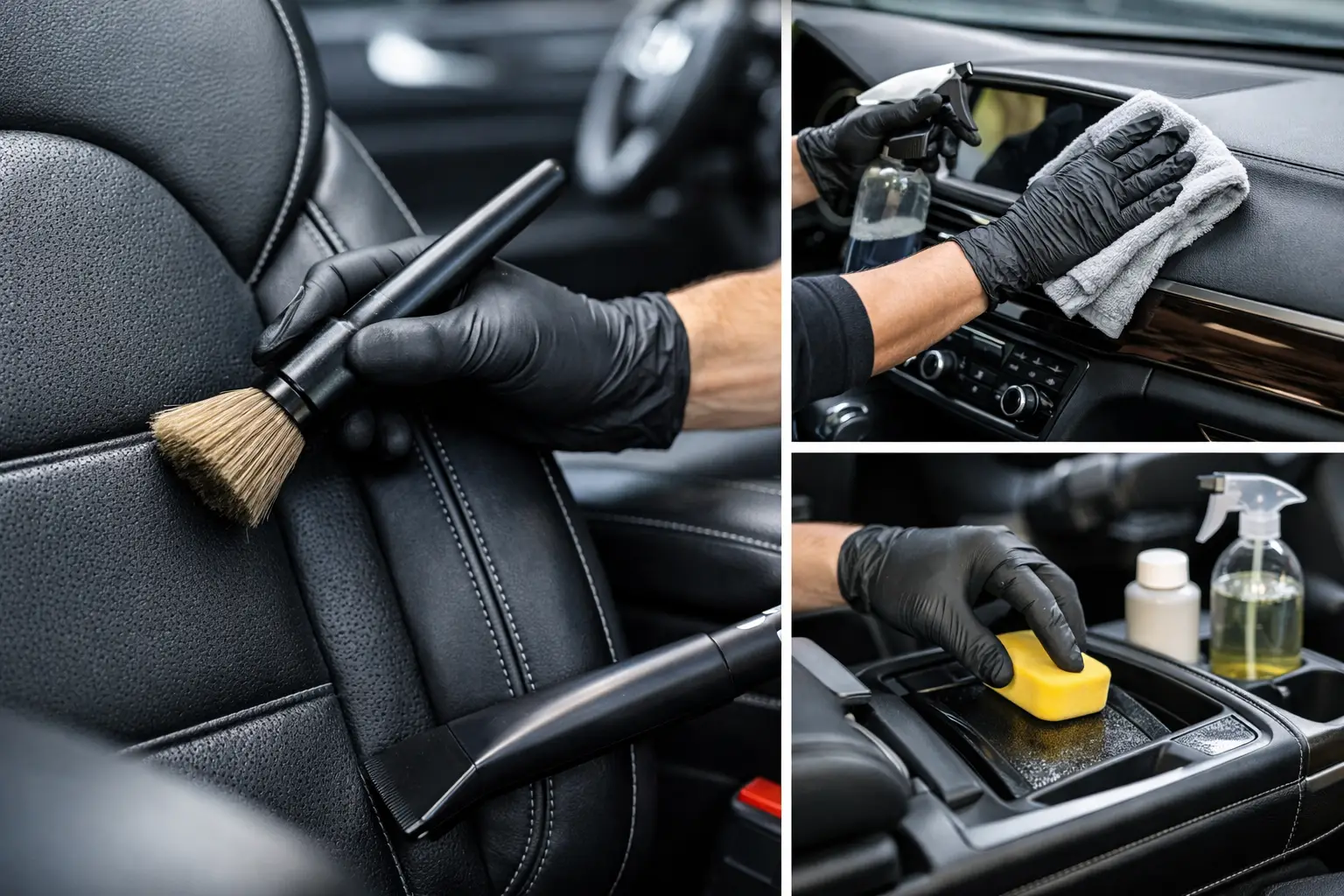
A coffee spill in the console, dust settling into the dash seams, and fingerprints on every touchpoint can make an otherwise exceptional vehicle feel neglected. So, what does interior detailing include? At a premium level, it is far more than a quick vacuum. It is a methodical cleaning and refresh of the cabin surfaces you see, touch, and rely on every day.
For busy Austin vehicle owners, interior detailing is also a practical way to protect the environment where you spend commutes, client calls, school drop-offs, and weekend drives. A professional mobile appointment brings that care to your home or workplace, without asking you to set aside part of your day at a shop.
What Does Interior Detailing Include?
The exact scope depends on the vehicle, its condition, and the package selected, but a full-service interior detail generally focuses on removing loose debris, cleaning high-contact surfaces, treating upholstery and leather appropriately, refreshing floor areas, and addressing odors. The goal is a cabin that looks composed, feels clean, and receives the level of care its materials require.
A premium service is not defined by rushing through a fixed checklist. A well-kept executive sedan and a family SUV after a busy season have different needs. Soil level, pet hair, food debris, stains, leather condition, and the presence of sensitive materials all affect the time and techniques required.
Vacuuming and debris removal
The work usually starts with a thorough vacuum of the seats, carpets, floor mats, cargo area, and accessible spaces between and beneath seats. Detailers use brushes and crevice tools to lift dry debris from seams, vents, cup holders, seat tracks, and other tight areas that a household vacuum rarely reaches.
This first step matters because loose grit is abrasive. Left under floor mats or in carpeting, it can gradually wear fibers and leave the cabin looking dull even after surface cleaning. For vehicles with pets, children, or frequent passengers, concentrated pet-hair removal may require additional attention.
Cleaning touchpoints and interior trim
A premium interior detail cleans the surfaces that collect oils, dust, sunscreen, and everyday residue: the steering wheel, shifter, console, door panels, dashboard, controls, cup holders, handles, and interior trim. Product selection is important. Harsh all-purpose cleaners can leave glossy residue, strip protective finishes, or create an artificial look on refined interior materials.
The preferred finish is clean and natural, not slick or overly shiny. Detailers work carefully around buttons, screens, switches, and electronic controls, using controlled moisture rather than soaking these areas. Air vents, trim seams, and other detailed surfaces receive focused attention to restore the crisp presentation of the cabin.
Interior glass is typically cleaned as well. That includes the windshield, side windows, rear glass, and mirrors, where accessible. Clear, streak-free glass improves both the look of the vehicle and visibility behind the wheel.
Seats, carpets, mats, and upholstery
Fabric seats, carpeting, and floor mats often need more than vacuuming. Depending on the material and condition, interior detailing may include spot treatment, shampooing, extraction, or low-moisture cleaning to loosen embedded soil and improve the appearance of fibers.
This is where expectations should be realistic. Fresh spills and ordinary tracked-in dirt often respond well to professional treatment. Older stains, dye transfer, oil-based residue, pet accidents, or discoloration that has penetrated deep into the material may be improved without disappearing completely. A quality detailer will prioritize the safest approach for the fabric rather than aggressively treating a stain at the risk of creating damage or uneven color.
Rubber or all-weather mats are commonly cleaned separately so that mud, sand, and grime do not return to the freshly detailed carpet. Carpeted mats require more caution and may need drying time before they are placed back in the vehicle.
Leather cleaning and conditioning
Leather interiors benefit from regular professional care, especially in Texas heat. Cleaning removes body oils, sunscreen, and residue that collect on seat bolsters, armrests, and steering wheels. Appropriate conditioning can help maintain a supple, refined finish without leaving the surface greasy.
Not every leather-like surface is the same. Modern vehicles may use coated leather, perforated leather, synthetic leather, Alcantara, suede, or a combination of materials. Each calls for a different process. Over-saturating perforations or using the wrong conditioner on suede-like materials can create avoidable problems, which is why material-specific treatment is part of luxury detailing.
Odor treatment and cabin refreshment
Odors are often caused by more than what is visible. Food particles, moisture in carpets, pet dander, smoke residue, and spills can remain in the cabin after a basic cleaning. Interior detailing can include deodorizing treatment designed to reduce unpleasant odors and leave the space feeling refreshed.
There is a distinction between neutralizing an odor and masking it with fragrance. Premium care aims for a clean, understated cabin rather than a heavy scent. Persistent smoke odors, mildew, or contamination that has reached the headliner, insulation, or HVAC system may require specialized remediation beyond a standard interior detail. In those cases, a clear assessment before service is more useful than a promise that any odor can be removed in one visit.
Areas That Need Special Care
Some of the most visible parts of an interior are also the easiest to damage with the wrong process. A quality detail accounts for them instead of treating every surface alike.
Screens, piano-black trim, and delicate finishes
Infotainment screens, gauge displays, and glossy piano-black trim show fingerprints quickly and scratch easily. These areas should be cleaned with soft, suitable materials and light pressure. The same care applies to wood trim, carbon fiber, metal accents, and matte finishes.
Headliners deserve particular restraint. Because the fabric is adhered to the roof structure, excessive moisture or scrubbing can weaken the adhesive and cause sagging. A proper detailer treats spots gently rather than saturating the panel.
Crevices and overlooked spaces
Luxury interior detailing earns its value in the details: door-jamb-adjacent edges, console compartments, seat rails, stitching, vent slats, buckle receptacles, and storage pockets. These spaces do not always need intensive correction, but cleaning them changes how complete the finished cabin feels.
A vehicle can look clean at first glance while still holding dust in every seam. Addressing those areas creates the composed, cared-for result that a quick wash-and-vacuum service rarely delivers.
What Interior Detailing May Not Include
A standard interior appointment is not automatically a restoration service. It may not include severe mold remediation, biohazard cleanup, extensive smoke removal, deep headliner restoration, dismantling seats or trim, repair of cracked leather, or replacement of worn carpeting. Those needs may require an advanced service, added time, or a specialist.
The same applies to personal belongings. Removing valuables, paperwork, child seats, and loose items before an appointment gives the detailer access to the areas that need attention while protecting your privacy. If a child seat must remain installed, cleaning underneath it may be limited for safety and liability reasons.
It is also worth discussing drying time. Deep carpet or upholstery cleaning can leave materials slightly damp, particularly in humid conditions or when a vehicle has significant staining. A thoughtful mobile detailing provider will explain what was treated and what to expect before you leave the vehicle closed up for the evening.
Choosing the Right Level of Interior Care
If your vehicle is maintained regularly, a premium interior detail may focus on preservation: vacuuming, touchpoint cleaning, leather care, glass cleaning, and a polished cabin refresh. For a vehicle that has been through road trips, work travel, pets, or an active family schedule, more intensive upholstery and carpet treatment may be appropriate.
The best choice is based on condition, not simply vehicle size. A lightly used three-row SUV may need less corrective work than a compact car with neglected fabric seats. Sharing a few honest details when booking helps set the right expectations and allows the appointment to be planned around your vehicle.
Aurelian Automotive brings appointment-based luxury detailing directly to Austin clients who expect professional care without the inconvenience of a detailing facility. Before your next appointment, take a quick look beneath the seats, inside the cup holders, and across the driver’s bolster. Those everyday areas will tell you whether your cabin needs a routine refresh or a deeper level of attention.