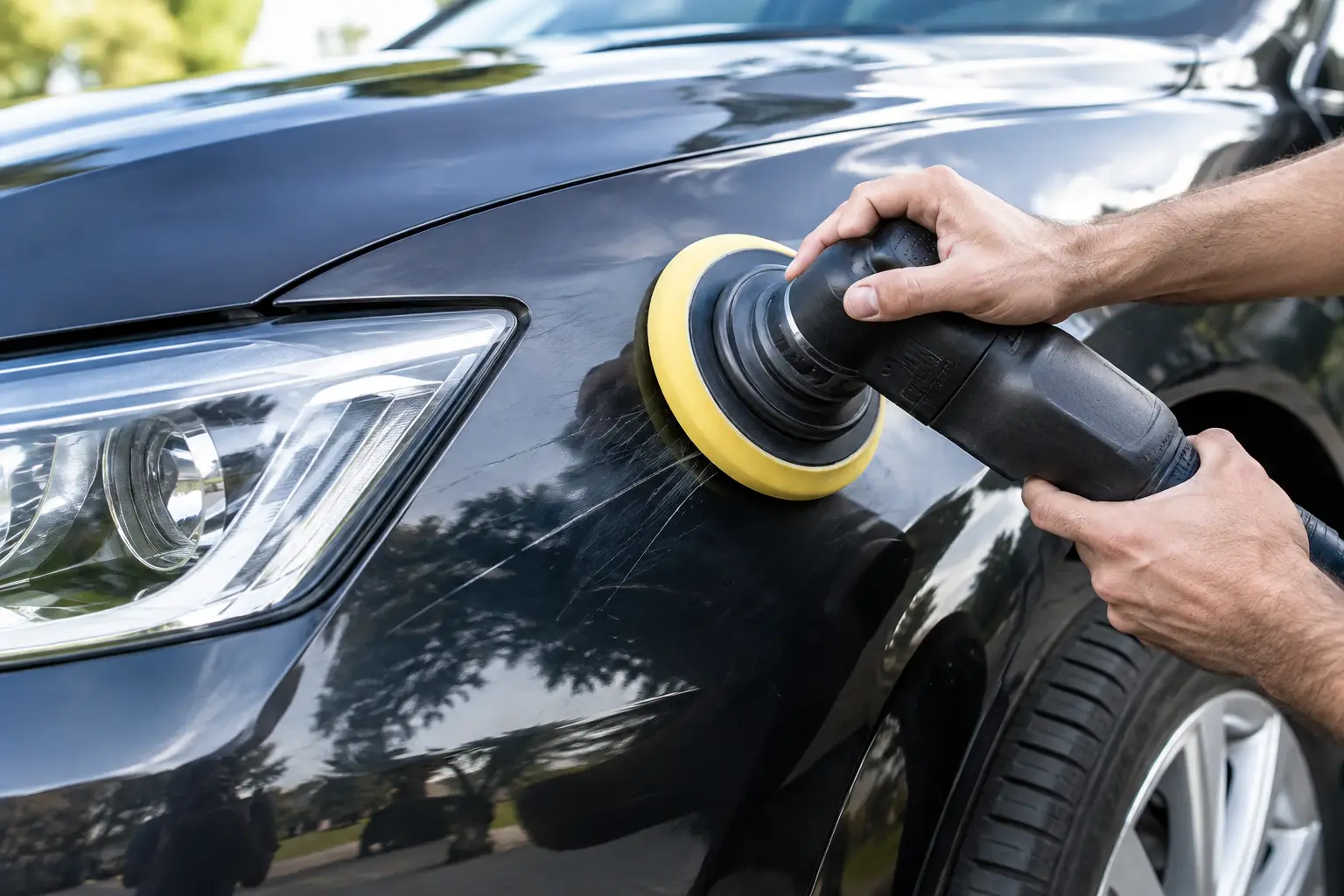
A black SUV can look freshly washed from ten feet away, yet show every parking-lot scuff and wash mark as soon as the Austin sun hits it. So, can detailing remove scratches? Often, yes - but only when the damage is limited to the uppermost layers of the paint. The distinction matters. Premium detailing can make many vehicles look dramatically better in a single appointment, while deeper scratches require touch-up paint, refinishing, or body repair.
A proper assessment comes before any promise. Luxury vehicle care is not about applying a product and hoping for the best. It is about identifying what is actually on the surface, what is in the clear coat, and what has gone through the paint itself.
Can Detailing Remove Scratches? It Depends on the Depth
Most modern vehicles have several layers: a protective clear coat on top, color beneath it, then primer and metal or plastic. Detailing and paint correction work within the clear coat. When a scratch is shallow enough, a skilled detailer can level a very small amount of surrounding clear coat so the scratch no longer catches light in the same way.
That process does not add paint. It carefully improves the appearance of the existing finish. This is why the right expectation is usually “significantly reduced” rather than “every mark erased.” On well-maintained vehicles with light defects, the visual transformation can be substantial.
A simple rule is useful: if the mark disappears or becomes difficult to see when the panel is wet, it may be a clear-coat defect that polishing can improve. If you can feel a sharp groove with a fingernail, see a different color beneath the surface, or spot exposed primer or metal, detailing alone is unlikely to remove it completely.
Marks detailing can often improve
Fine swirl marks, light spiderwebbing, faint towel marks, minor paint transfer, and shallow scuffs are common candidates for paint correction. These often come from automatic car washes, improper hand washing, dirty towels, brushes, or everyday contact with soft materials.
Paint transfer deserves special mention. What looks like a deep scrape from a garage wall, another door, or a shopping cart may partly be foreign material sitting on top of the clear coat. With the correct decontamination and polishing approach, much of that color transfer can sometimes be removed. A remaining scratch may still be visible, but the panel can look far cleaner and more refined.
Water spots, oxidation, and light haze are not always scratches, but they can dull paint in a similar way. Exterior detailing with paint correction may improve these conditions as well, depending on how long the damage has been present and the condition of the finish.
Damage that needs more than detailing
A deep scratch that reaches the color layer cannot be polished away without removing too much surrounding clear coat. If primer, bare metal, or plastic is visible, the correct repair involves paintwork. On metal panels, prompt attention also matters because exposed areas can begin to corrode.
Key scratches, severe rock chips, gouges along a bumper, cracked paint, and damage with a raised or torn edge usually fall into this category. A detailer may be able to clean the area, reduce surrounding swirls, and make the defect less noticeable, but a premium service should be clear about the limit of correction.
Touch-up paint can improve small, isolated chips, though it is rarely invisible at close range. For a near-factory appearance on larger or highly visible damage, a qualified paint and body specialist is generally the better choice. Detailing and paint repair are complementary services, not interchangeable ones.
What Paint Correction Actually Does
Paint correction is the controlled polishing stage that follows a thorough exterior cleaning and decontamination process. The vehicle is washed carefully to remove loose dirt, then bonded contaminants may be removed from the paint. Only then can the true condition of the surface be evaluated under proper lighting.
The detailer selects a combination of machine, pad, polish, speed, and working technique suited to the paint. Some finishes are relatively soft and correct quickly. Others, including certain luxury and performance paints, are harder and require a more deliberate approach. The goal is to achieve meaningful improvement while preserving as much clear coat as possible.
A one-step polish is often an excellent choice for a newer daily driver with light swirls. It can restore gloss and clarity without pursuing every isolated defect. A multi-step correction may provide a higher level of refinement for a vehicle with heavier wash damage, but it takes more time and is not automatically the right value for every owner.
That is the trade-off many people miss: chasing 100 percent correction is not always wise. Clear coat is finite. A responsible detailer considers the vehicle’s age, paint condition, future ownership plans, prior polishing history, and the owner’s expectations before recommending an aggressive correction.
Why a Wash Will Not Fix Scratches
A thorough wash can remove dirt, road film, bugs, and some surface contamination. It cannot remove a scratch that has changed the shape of the clear coat. In fact, washing without safe techniques can create more fine scratches over time.
Basic wash-and-vacuum services may use quick processes designed for volume. Luxury detailing is different. Clean wash media, careful drying methods, paint-safe products, and controlled polishing all contribute to a finish that looks better and stays better.
For busy owners, mobile service does not need to mean compromised standards. An appointment-based exterior detail can be completed at your home or workplace, giving your vehicle professional attention without asking you to spend part of the day at a shop. Aurelian Automotive brings premium, full-service care to Austin-area appointments with the convenience expected from a modern luxury service.
Protecting the Finish After Correction
Once swirls and light scratches have been reduced, protection helps preserve the result. A quality wax, paint sealant, or ceramic coating can add gloss, make cleaning easier, and provide a sacrificial layer against environmental exposure. They do not make paint scratch-proof, and a coating will not fill or permanently remove deep scratches.
For vehicles that see frequent highway driving, paint protection film is worth considering for high-impact areas such as the front bumper, hood, mirrors, and rocker panels. It is a more significant investment than a coating, but it offers physical protection against many chips and abrasions that polishing cannot solve.
The day-to-day habits matter just as much. Avoid drive-through brushes when possible. Use clean microfiber towels rather than old bath towels. Do not wipe dust from dry paint, since dust acts like an abrasive. If bird droppings, bug residue, or tree sap land on the vehicle, remove them promptly instead of allowing them to etch into the clear coat.
Austin heat adds another reason to stay ahead of paint care. Strong sun, dust, pollen, construction debris, and sudden rain can quickly leave a clean vehicle looking tired. Regular professional maintenance makes it easier to correct minor defects before they become part of the vehicle’s overall appearance.
How to Decide What Your Vehicle Needs
Start with the result you want. If your goal is a cleaner, glossier daily driver with fewer visible wash marks, a professional exterior detail and measured paint correction may be the right fit. If you are preparing a luxury vehicle for sale, an event, or a lease return, improving the visible finish can make a meaningful difference in presentation.
If the damage is concentrated in one deep scratch, ask for an honest assessment before investing in broad correction work. The best recommendation may be touch-up, a body-shop repair, or a combination of repair and detailing. A clear answer protects both your vehicle and your time.
The most satisfying paint correction is not the one that promises perfection. It is the one that leaves the finish richer, clearer, and properly protected while respecting the limits of the paint that is still there.