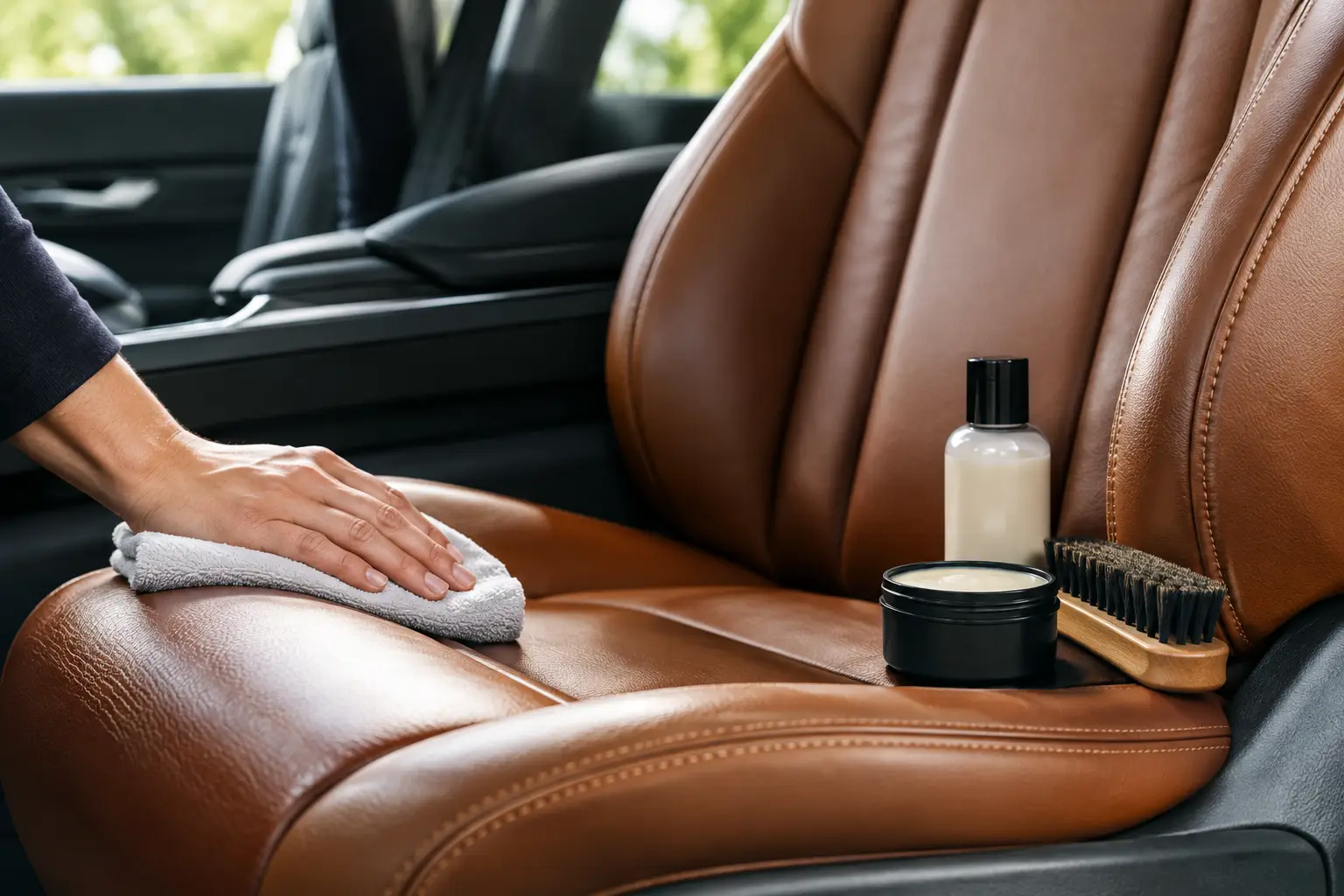
A leather interior can make every drive feel more considered, whether it is the quiet cabin of an executive sedan, a family SUV, or a weekend performance vehicle. But heat, sunlight, body oils, denim transfer, and everyday use gradually change the surface. Leather conditioning is the service that helps preserve the soft feel and polished appearance owners expect from a premium interior - when it is done with the right products and at the right interval.
For Austin-area vehicle owners, the issue is not merely cosmetic. Long stretches of heat and intense sun can accelerate dryness, particularly on exposed seats, steering wheels, door panels, and center consoles. Thoughtful leather care supports the vehicle's presentation while helping its interior materials age more gracefully.
What Leather Conditioning Actually Does
Leather conditioning replenishes the surface with ingredients designed to maintain flexibility and reduce the dry, tight feel that can precede visible wear. On appropriate automotive leather, a quality conditioner can improve the tactile finish, soften the appearance of light dryness, and leave the cabin looking cared for rather than artificially glossy.
Conditioning is not the same as cleaning. Cleaning removes accumulated soil, oils, sunscreen residue, spills, and dye transfer. Conditioning follows only after the surface is clean and fully dry. Applying conditioner over dirt does not protect the leather. It can trap residue at the surface and produce an uneven result.
It is also not a repair service. A conditioner may make minor dryness less noticeable, but it cannot reverse torn upholstery, deep cracking, worn color coating, or damaged stitching. Those concerns require a different level of assessment and, in some cases, professional leather repair or reupholstery.
Modern Automotive Leather Needs a Measured Approach
Many drivers picture leather as a fully natural, absorbent hide that needs frequent heavy treatment. Most modern vehicles use coated or protected leather. The leather beneath is genuine, but its visible surface is covered by a protective finish. That finish is why many premium interiors resist minor spills and why an overly oily conditioner often sits on top rather than absorbing as expected.
This distinction changes the service approach. The goal is not to saturate the seat with a thick dressing. It is to clean the coated surface safely, apply a compatible conditioner or protectant in a controlled amount, and buff away excess. The finished result should feel smooth and conditioned, not slick, shiny, or greasy.
Some vehicles use materials that resemble leather but should be treated differently. Vinyl, synthetic leather, vegan leather, and certain specialty finishes may benefit more from a dedicated interior protectant than a traditional leather conditioner. Perforated leather, matte finishes, suede, Alcantara, and nubuck each require their own methods. A premium detail begins with identifying the material rather than applying one product to every seat.
When Your Vehicle May Need Leather Conditioning
Leather does not need attention on a fixed calendar just because a bottle suggests it does. Usage, parking conditions, interior color, and prior care all matter. A vehicle that lives in a covered garage and is driven lightly may need less frequent conditioning than one that is parked outdoors during the workday or carries children, pets, and passengers regularly.
Look for practical signs: the seat surface feels less smooth than usual, the driver bolster appears dull, light creasing is becoming more pronounced, or the interior looks dry after a proper clean. A steering wheel that feels grimy is usually asking for cleaning first, not a heavy conditioner. Product buildup on touch points can make them slippery and attract more soil.
For most well-maintained daily drivers, a professional interior service that includes appropriate leather care several times a year is usually more sensible than monthly conditioning. In Central Texas, vehicles with regular sun exposure may benefit from more frequent inspection, especially as summer progresses. The right frequency is based on condition, not a sales schedule.
The Details That Make the Difference
Premium leather care is restrained. Before any conditioner is applied, the interior should be vacuumed thoroughly so grit is not moved across the upholstery. The leather is then cleaned with a suitable product and soft tools, with extra attention to seams, perforations, stitching, bolsters, and frequently touched areas.
The product selection matters as much as the application. Harsh degreasers can strip the surface and leave it looking flat. Heavy silicone dressings can create an unnatural shine and transfer onto clothing. Household oils, saddle soaps, and products intended for boots or furniture are poor substitutes for automotive-specific care. They can alter the look of coated leather, leave residue, or create a finish that does not belong in a modern luxury cabin.
A light, even application is generally the better choice. Excess is removed after the product has had time to settle, leaving a clean, low-sheen finish. The aim is for the interior to look refreshed without advertising that it has been treated.
Leather conditioning should also fit within a broader interior-detailing process. Clean glass, refreshed trim, carefully treated floor mats, and odor-free surfaces all influence how the cabin feels. Focusing only on the seats can leave an otherwise premium interior looking incomplete.
What to Avoid Between Appointments
Daily habits have a larger effect on leather than most owners realize. Direct sun is one of the most persistent sources of interior stress, so covered parking or a quality windshield sunshade can make a meaningful difference. Promptly blot spills rather than rubbing them into the surface, and avoid letting sunscreen, lotion, or hand sanitizer remain on seats and touch points for extended periods.
Be cautious with quick-detail wipes marketed as a cure-all. Some leave a glossy film that looks impressive for a day but changes the natural finish and collects dust. If you are unsure whether a product is suitable for your vehicle's materials, it is better to use a clean, lightly damp microfiber towel for minor cleanup and leave deeper treatment to a professional service.
Avoid spraying products directly into perforations, around seat controls, or onto a steering wheel. The steering wheel deserves special care: it should be clean and naturally finished for secure grip, not coated with a slippery dressing.
Why Mobile Professional Care Fits a Busy Schedule
A full-service interior detail gives leather the attention it needs without turning vehicle care into another errand. For professionals, families, and enthusiasts who value their time, mobile detailing allows that work to happen at home or at another approved location while the day continues around it.
Aurelian Automotive provides luxury mobile detailing by appointment for owners who want a more deliberate standard of interior care. The value is not simply applying a conditioner. It is evaluating the condition of the materials, cleaning them properly, using suitable products, and finishing the cabin with the level of restraint a premium vehicle deserves.
That approach is particularly useful before client meetings, special events, a vehicle sale, or after a demanding season of travel. It is also a practical way to maintain a newer vehicle before wear becomes more noticeable. Regular professional care can help keep the driver's seat, passenger areas, and high-contact surfaces aligned with the rest of the vehicle's presentation.
A Better Standard for a Material You Touch Every Day
Leather is one of the few vehicle materials experienced constantly rather than viewed occasionally. You feel it when you settle into the driver's seat, grip the wheel, or rest an arm on the console. Treating it well should make the cabin more pleasant now while helping preserve the quality that influenced the purchase in the first place.
The best result is quiet: clean leather, a natural finish, and no residue left behind. Schedule care before the interior looks neglected, and your vehicle can continue to feel as refined as the day you brought it home.